
Electrolyte temperature control system
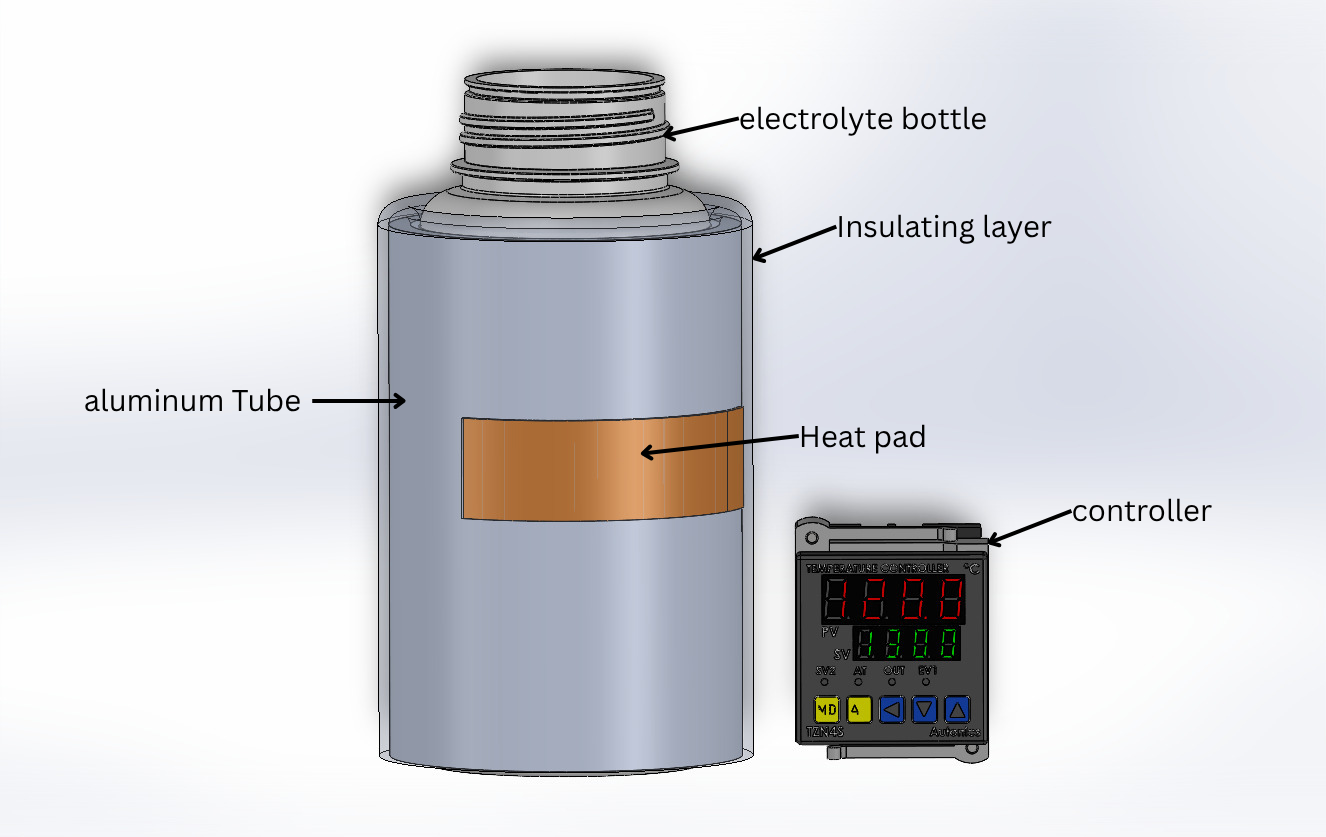
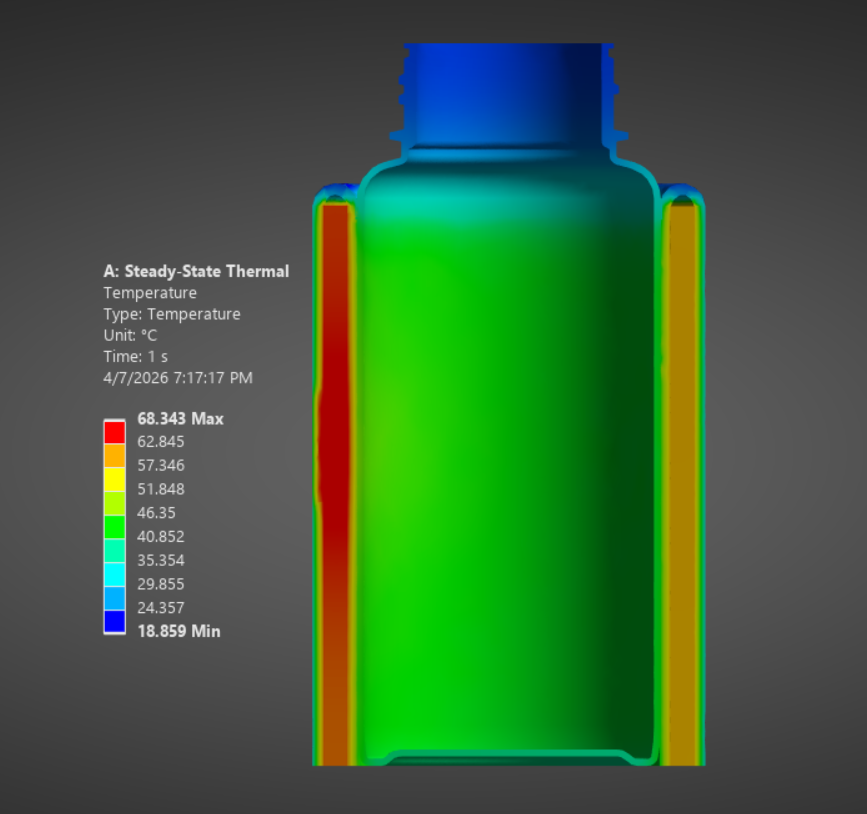
The system was designed to manage heat input, distribution, and temperature regulation in a compact and integrated architecture. A localized heating element provides controlled heat input, while an aluminum sleeve spreads heat circumferentially to reduce gradients and promote uniform temperature at the container interface. Thermal simulations were used to evaluate heat transfer through the system, from the heater contact region to the full container, ensuring efficient energy transfer and minimizing hot spots.
An insulated outer layer made of double sided aluminum bubble wrap reduces heat loss and helps maintain stable operating conditions during use. Temperature is regulated through thermocouple feedback and a closed-loop controller using on/off control, allowing the system to maintain the target temperature with consistent and stable behavior.
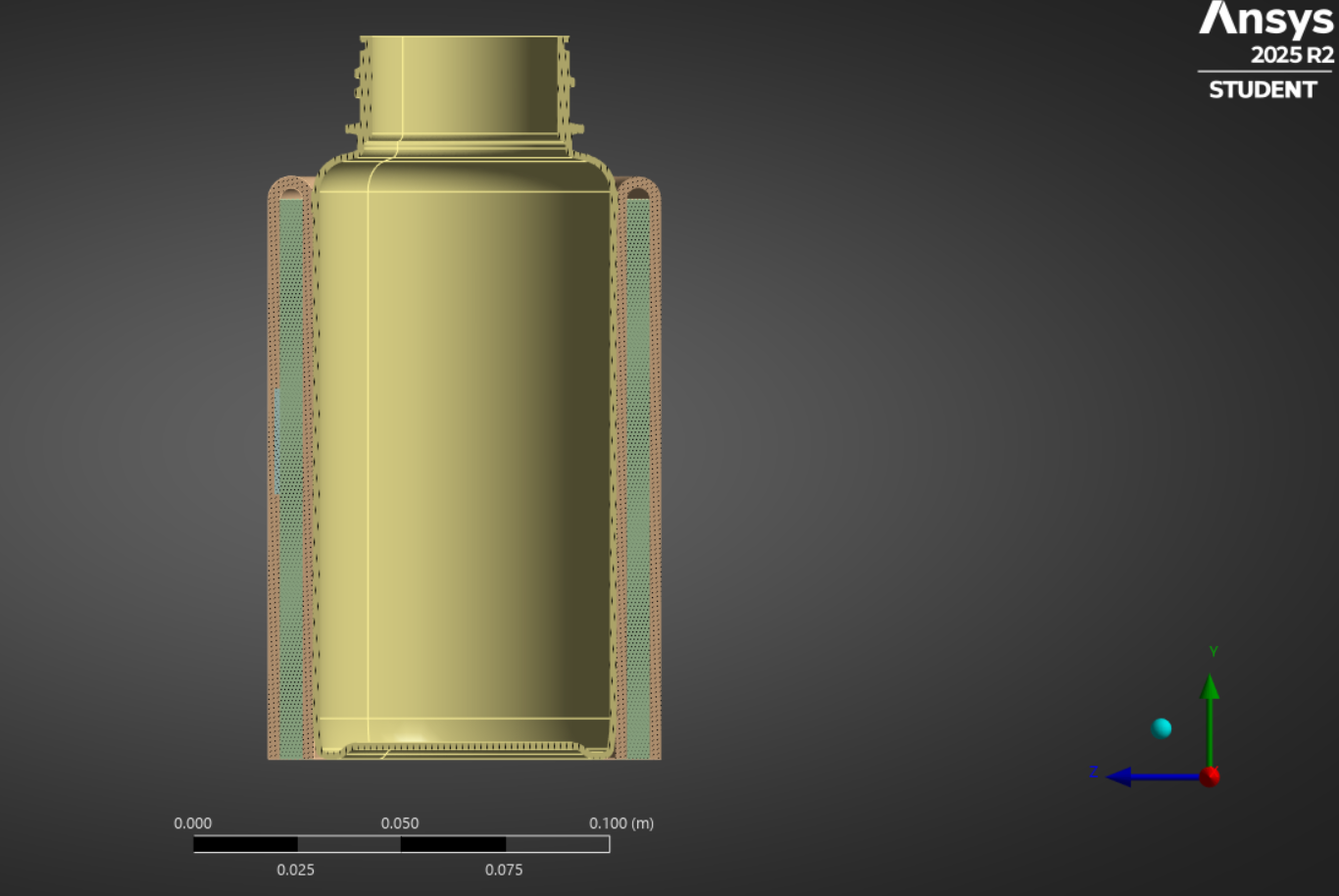
Developed a thermal control system to maintain electrolyte temperature at approximately 42 degreed C during open-container handling in pouch cell assembly
Designed a custom receptacle to provide stable, controlled heating while allowing active operator use
Integrated a heating element, aluminum sleeve, and insulated outer layer to balance heat transfer and minimize losses
Implemented a compact architecture combining thermal management, sensing, and structural support into a single unit
Optimized the system for consistent temperature, safe operation, and ease of integration into a manufacturing environment
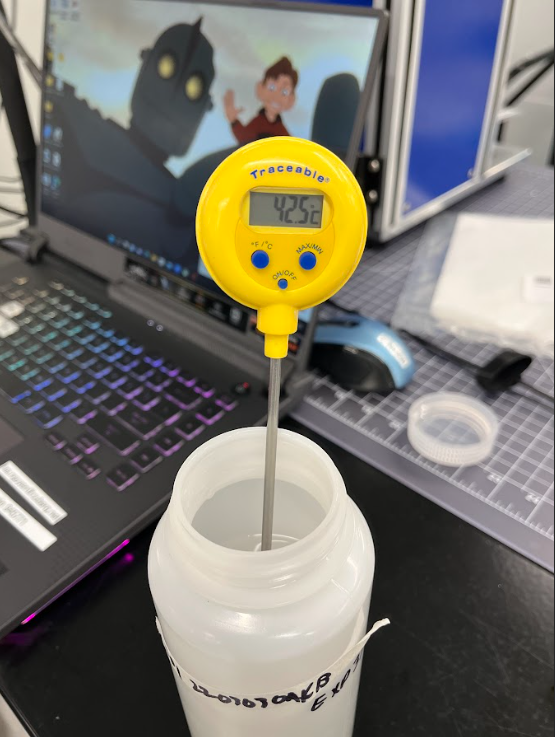
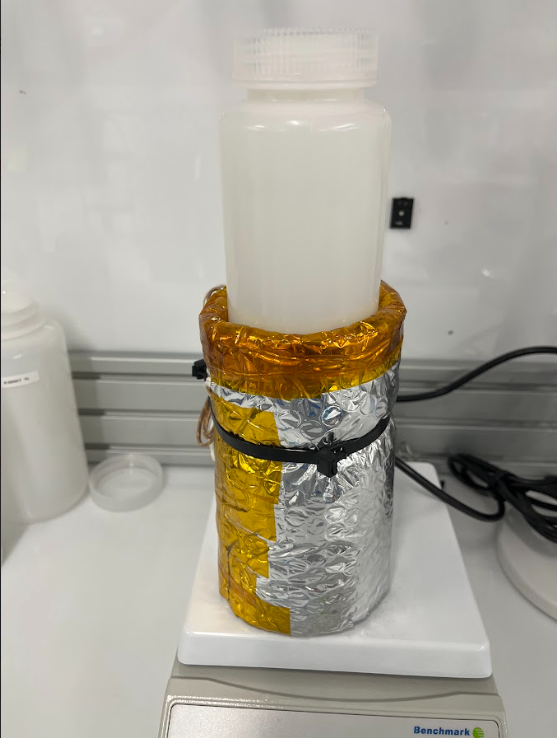
A functional prototype was buile to validate the thermal design under real operating conditions. The system combines a heating element, aluminum heat-spreading interface, and insulated enclosure to maintain controlled temperature during electrolyte handling.
Temperature was monitored using a thermocouple inserted directly into the container, enabling real-time validation of heating performance. The system successfully reached and maintained the target temperature (~42°C), demonstrating stable thermal behavior during operation.
This prototype highlights a practical implementation of the design, balancing heat transfer efficiency, insulation, and usability within a compact setup.